Archives
- 2026-08
- 2026-07
- 2026-06
- 2026-05
- 2026-04
- 2026-03
- 2026-02
- 2026-01
- 2025-12
- 2025-11
- 2025-10
- 2025-09
- 2025-03
- 2025-02
- 2025-01
- 2024-12
- 2024-11
- 2024-10
- 2024-09
- 2024-08
- 2024-07
- 2024-06
- 2024-05
- 2024-04
- 2024-03
- 2024-02
- 2024-01
- 2023-12
- 2023-11
- 2023-10
- 2023-09
- 2023-08
- 2023-07
- 2023-06
- 2023-05
- 2023-04
- 2023-03
- 2023-02
- 2023-01
- 2022-12
- 2022-11
- 2022-10
- 2022-09
- 2022-08
- 2022-07
- 2022-06
- 2022-05
- 2022-04
- 2022-03
- 2022-02
- 2022-01
- 2021-12
- 2021-11
- 2021-10
- 2021-09
- 2021-08
- 2021-07
- 2021-06
- 2021-05
- 2021-04
- 2021-03
- 2021-02
- 2021-01
- 2020-12
- 2020-11
- 2020-10
- 2020-09
- 2020-08
- 2020-07
- 2020-06
- 2020-05
- 2020-04
- 2020-03
- 2020-02
- 2020-01
- 2019-12
- 2019-11
- 2019-10
- 2019-09
- 2019-08
- 2019-07
- 2019-06
- 2019-05
- 2019-04
- 2018-07
-
br Acknowledgments This study was financially
2021-11-18
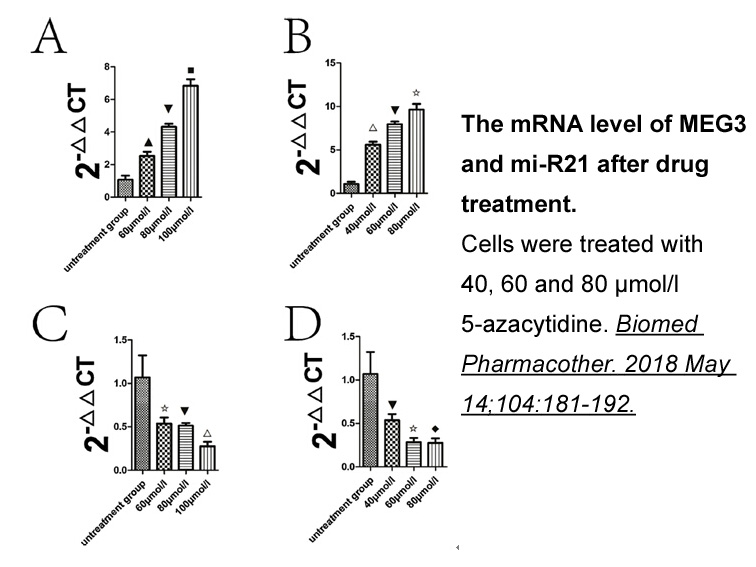
Acknowledgments This study was financially supported by National Science Center Poland grant No DEC-2011/02/A/NZ4/00031 (KKK), Jagiellonian University Medical College (Poland) grants: K/ZDS/007130 (SM) and K/ZDS/007131 (SM), COST Action CA15135 (DŁ, HS, KKK) and DFG INST 208/664-1 FUGG (HS). Than
-
br Conclusion Infections caused by the P aeruginosa
2021-11-18

Conclusion Infections caused by the P. aeruginosa could not be cured by current antibiotics, making multiple drug resistance of P. aeruginosa an increasing threat for human lives. Looking for a new therapeutic mechanism for infections caused by the P. aeruginosa has become a central issue. There
-
G protein coupled receptor kinases GRKs are another group
2021-11-18
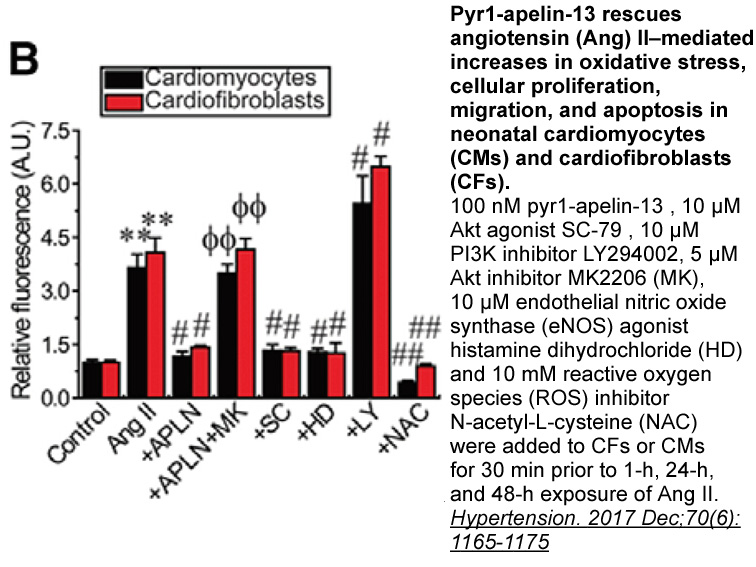
G protein-coupled receptor kinases (GRKs) are another group of kinases whose limited substrate repertoire is associated with an extensive binding interface. GRKs phosphorylate activated G protein-coupled receptors (GPCRs) at multiple sites, promoting binding of arrestin proteins to mediate receptor
-
Although historically the two ROCK isoforms
2021-11-18
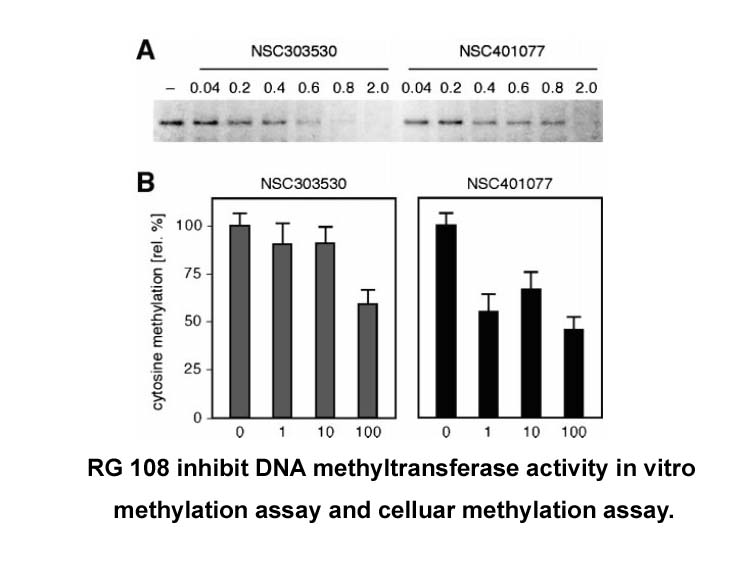
Although historically, the two ROCK isoforms have been viewed as redundant, recent observations show that the two isoforms of ROCK might have different functions (Newell-Litwa et al., 2015). Knockdown of ROCK1 was found to result in cell rounding and a decrease in cell size while cells with knockdow
-
The global spread and ever increasing incidence of
2021-11-17
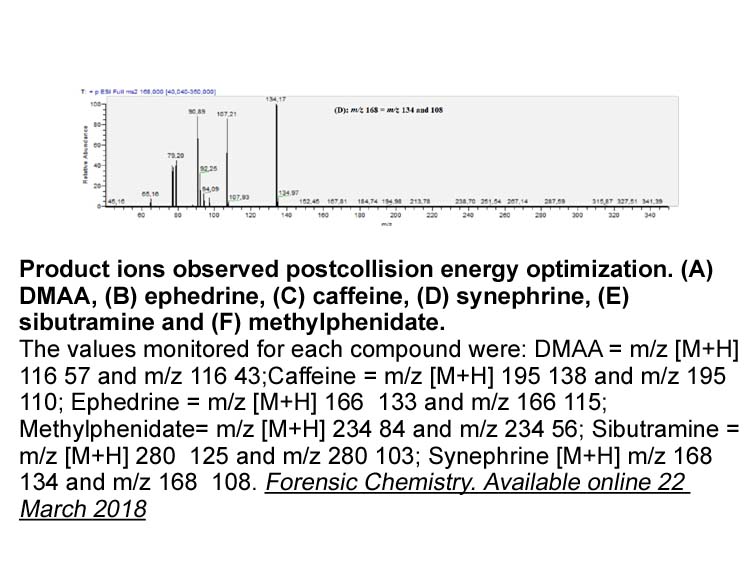
The global spread and ever-increasing incidence of metabolic syndrome over the past few decades has not only categorized it as an ‘epidemic’ but has also dramatically increased the risk of cardiovascular diseases and diabetes. The increase in prevalence of diabetes in the United States alone has bee
-
Many studies support that the increase of P
2021-11-17
Many studies support that the increase of P4 improves embryonic survival and reduces embryonic losses in ruminants [6,[18], [19], [20]]. However, experimental results are variable, contradictory and often inconclusive results. Certain studies showed that administration of GnRH or hCG after artificia
-
In this report we characterized MRJP containing
2021-11-17

In this report, we characterized MRJP-containing A-740003 synthesis and other (glyco)proteins from honey. Honey glycoproteins demonstrated potent anti-C. elegans activity. It has been reported that molecules that kill C. elegans are likely to be toxic to parasitic nematodes (Burns et al., 2015). To
-
With taurine or other molecules that might be
2021-11-17
With taurine, or other molecules that might be transported by Eaat2, an important area of research will be how such a chemical regulates sleep. Indeed, taurine has been described to act on the nervous system in disparate ways — it can act as an inhibitory neurotransmitter, but also has a well-charac
-
br Materials and methods br
2021-11-17
Materials and methods Results Discussion The glucose transporter GLUT1 can be acutely activated or inhibited in L929 fibroblast Primidone australia by a wide variety of reagents or nutrient conditions [[9], [10], [11], [12],36,50]. This abrupt change in the activity of GLUT1 occurs within m
-
In the small intestine digestion and absorption of the nutri
2021-11-17
In the small intestine, digestion and Pyridostatin of the nutrients are the next processes with an impact on the resulting plasma profile. Normally, neither carbohydrate digestion nor absorption are limiting factors, which is illustrated by the rapid and extensive absorption of glucose in condition
-
Irinotecan HCl Trihydrate br Materials and methods br Result
2021-11-17
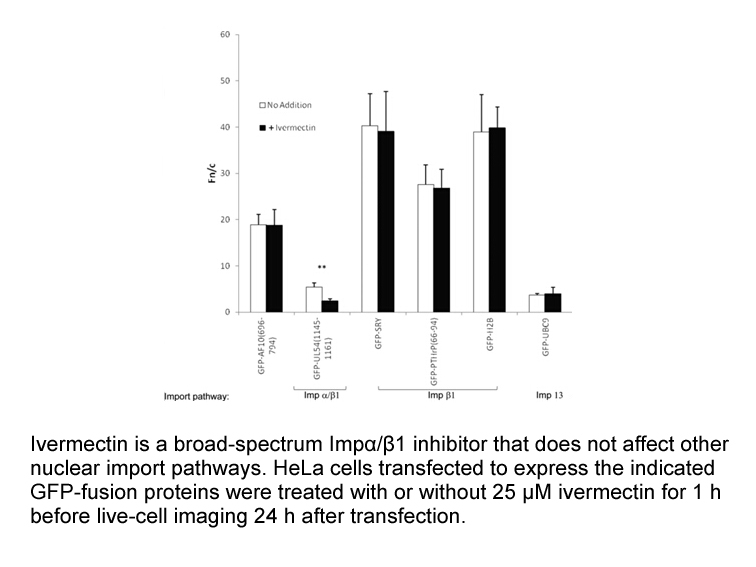
Materials and methods Results Discussion Defective regulation and inappropriate activation of the HH signaling pathway is implicated in many cancers. SMO targeting inhibitors were the first to enter clinical trials, however complications with acquired resistance and toxicity, also exemplifi
-
ddr1 While ghrelin s role in addictive behaviors has
2021-11-17
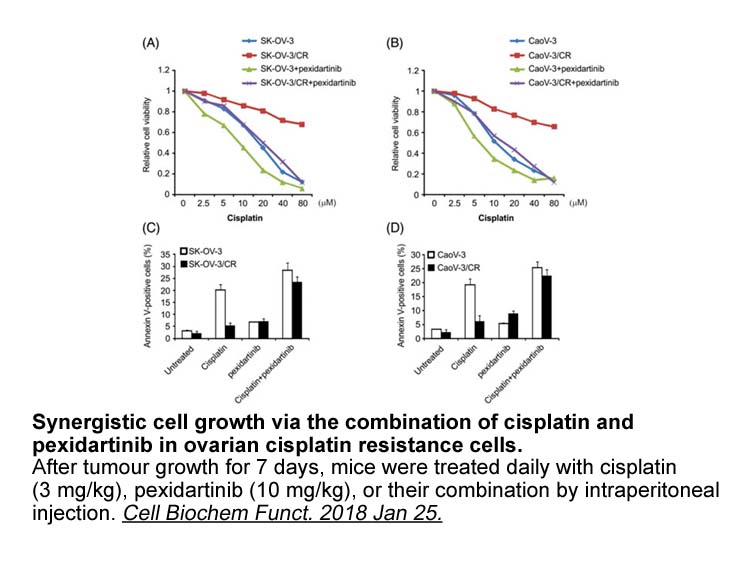
While ghrelin's role in addictive behaviors has been most extensively explored with alcohol, ghrelin has also been implicated in biobehavioral substrates of other drugs of abuse. For example, preclinical experiments suggest that GHS-R1a blockade may improve nicotine [155,156], opioids [[157], [158],
-
By using pharmacological treatment with CBX or transgenic an
2021-11-17
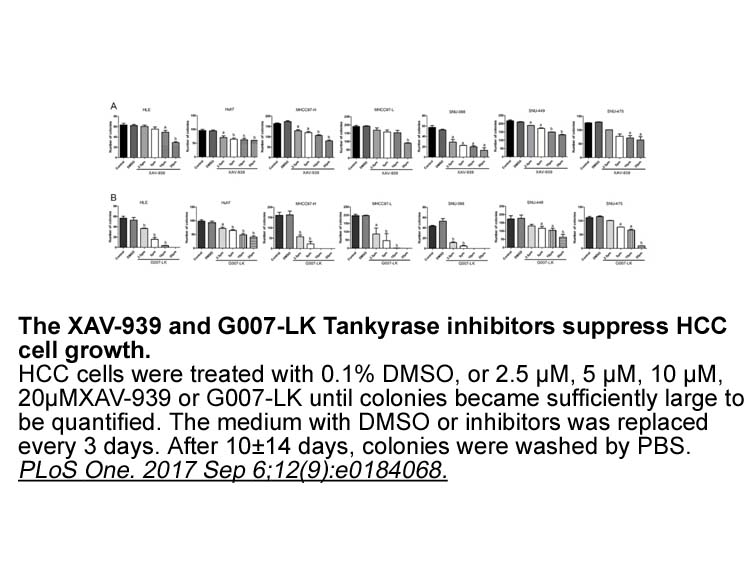
By using pharmacological treatment with CBX or transgenic animals lacking the two major astroglial Cxs, the Double KO mouse, we demonstrated that the gap-FRAP technique was able to detect the total inhibition of GJC with a reduction of about 39% and 38% compared to control, respectively. The residua
-
Studies regarding secretase nowadays aim
2021-11-17
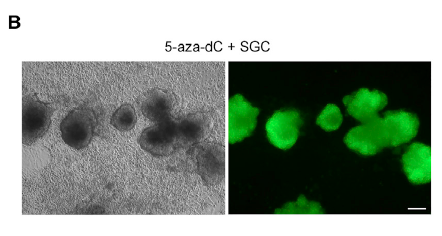
Studies regarding γ-secretase nowadays aim at elucidating how APP is recognized and recruited. It has been suggested based on coarse-grained molecular simulation that the recognition and recruitment of substrate can occur on an extended surface covering PS1's TM2/6/9 domains and PAL motif [15]. Tran
-
NSC 207895 Because FPR is expressed in VSMCs and its role in
2021-11-17
Because FPR-1 is expressed in VSMCs and its role in non-hematopoietic cells is still unclear, we questioned whether FPR-1 would have physiological relevance for vascular behavior, in the same way as it does in neutrophils (Ca2+ homeostasis and NSC 207895 polymerization). First, we tested if FPR-1 is
16275 records 595/1085 page Previous Next First page 上5页 591592593594595 下5页 Last page